2023-2024 Legislative Session
Housing Security
On a given day in 2023, Wisconsin had 4,775 homeless Wisconsinites were staying in emergency shelters, and 301 were sleeping in the streets. In 2019-20, 13,308 children attending Wisconsin public schools lacked a fixed, regular, and adequate nighttime residence. Wisconsin's housing shortage disproportionately impacts the lowest-income households. Wisconsin has an estimated 183,834 households earning less than 30% of the median income, but only 69,000 homes are considered affordable for those families.
Equity in Criminal Justice System
Wisconsin imprisons Black residents at a higher rate than any other state in the country at a rate of 1 in 36 Black adults. Black individuals comprise 42% of the Wisconsin prison population, but just 6% of the state’s population and are imprisoned 12x the rate of white Wisconsinites. Nationally, Black Americans are imprisoned at a rate 5x that of White Americans. A 2020 study by the Wisconsin Court System found that men of color, particularly Black and Native American men, are significantly more likely to receive prison sentences than their white counterparts — 28% and 34% more likely, respectively, with white men 21% less likely than non-white men to receive a prison sentence.
Personal Safety
In 2020, “Milwaukee police confiscated more than 3,000 guns last year during traffic stops and domestic dispute calls--an 18% increase from 2019." -LA Times
2022 was in the worst year for gun violence in decades for Milwaukee, surpassing even the high levels last year. There were 214 homicides in Milwaukee, a more than doubling the number from 2019. 89% of these homicides were shootings. So far, 2023 has seen a trend downward in gun violence - but there is still a long way to go. As of June 2023, homicides are down 28%, and nonfatal shootings are down 4%.
Legislation
I have reintroduced the bipartisan Safe Harbor Act, which aligns Wisconsin law with federal provisions, by prohibiting the prosecution of children under 18 for acts of prostitution, currently a Class A misdemeanor. This significant legislation perceives children involved in commercial sex acts as victims of sexual exploitation and child abuse rather than criminals, without legalizing prostitution. It serves to assure these children that they are not culpable for the dreadful acts imposed upon them by traffickers. To track the Safe Harbor Act as it goes through the legislative process, CLICK HERE.
Universal Background Checks
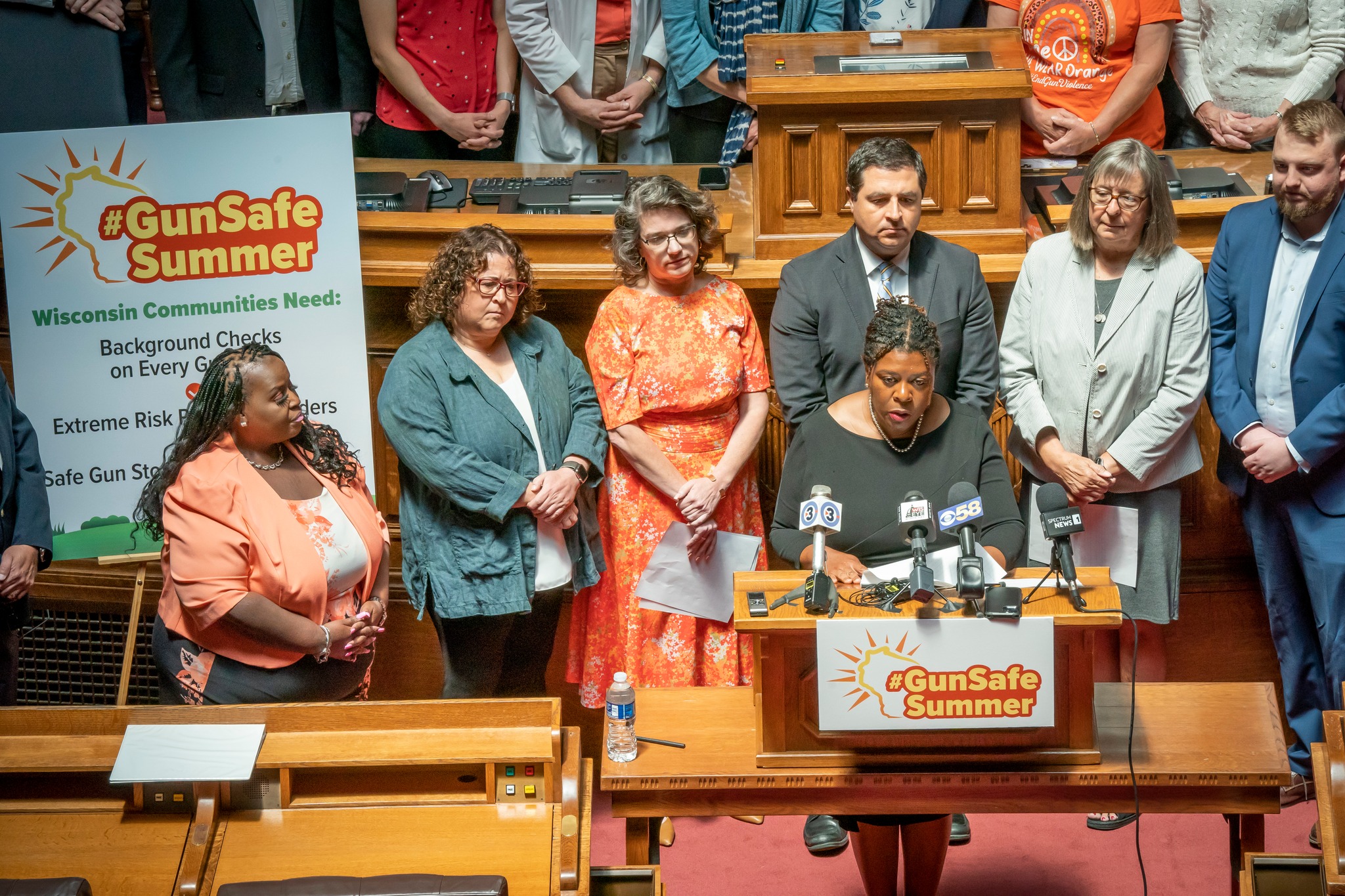
Amidst rising gun violence in Milwaukee, Democrats have reintroduced legislation for Universal Background Checks. These measures aim to address lax laws and loopholes contributing to widespread firearms availability, thereby endangering our community. The proposed legislation mandates background checks for all firearm purchasers and only permits firearm transfer via federally licensed dealers, with few exceptions. Through this legislation, we hope to decrease gun violence and ensure the safety of our families and community.
Extreme Risk Protection Orders
Recognizing that dangerous warning signs were present in 56% of mass shootings and numerous suicide cases, Wisconsin Democrats have reintroduced legislation to implement an extreme risk protection order (ERPO). This bill permits family members or law enforcement officers to petition for a temporary firearm prohibition if they believe a person poses a risk to themselves or others. Drawing parallels to the existing temporary restraining order (TRO) and domestic abuse injunction processes, the proposed law seeks to proactively prevent harm while maintaining due process. It provides severe punishments for false claims and reaffirms commitment to upholding Second Amendment rights, positioning ERPO as a tool for law enforcement and families to save lives.
Trucker Education Bill
Given that truck drivers are literally where the rubber meets the road when human trafficking occurs along our highways, they can and do play a critical role in identifying and preventing traffickers who create victims through the exploitation of our transportation system.